
The Rhode Island voter data lawsuit was a federal case brought by the U.S. Department of Justice against Rhode Island Secretary of State Gregg M. Amore over the state’s refusal to provide detailed, non-public voter registration information.
A federal judge dismissed the DOJ’s lawsuit on April 17, 2026, ruling that federal law did not give the Justice Department the authority to demand the sensitive voter information it sought from Rhode Island.
The case is part of a much larger nationwide effort by the Trump administration to obtain detailed voter-registration records from states. By August 2026, courts had rejected numerous similar DOJ lawsuits.
What Was the Rhode Island Voter Data Lawsuit About?
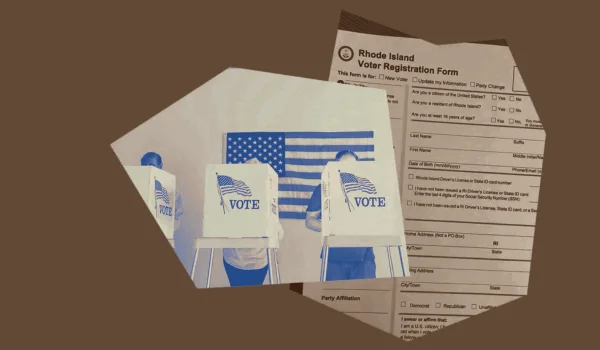
The dispute began when the DOJ asked Rhode Island for its statewide voter registration records.
Rhode Island offered to provide information that was already publicly available but refused to turn over certain non-public and sensitive voter information.
The DOJ subsequently sued Secretary of State Gregg Amore in federal court in Rhode Island.
The Justice Department said it wanted the records to help evaluate the accuracy of Rhode Island’s voter rolls and investigate compliance with federal election laws.
Rhode Island officials argued that the requested information was protected by state and federal privacy laws.
What Voter Information Did the DOJ Want?
The DOJ sought an unredacted statewide voter file containing sensitive information.
According to reporting on the case, the requested information could include:
- Voters’ names
- Dates of birth
- Residential information
- Driver’s license information
- Social Security number information
The DOJ wanted access to data covering nearly 750,000 registered Rhode Island voters.
This was significantly more information than the publicly available voter list Rhode Island was willing to provide.
Why Did Rhode Island Refuse?
Secretary of State Gregg Amore argued that Rhode Island could not simply hand over the requested non-public information because it was protected by state and federal law.
After the DOJ filed the lawsuit, Amore continued to defend Rhode Island’s position.
The Rhode Island Department of State described the lawsuit as an attempt to obtain non-public voter data protected by Rhode Island and federal law.
The dispute therefore became a question of how much authority the federal government has to demand detailed voter information maintained by a state.
Why Did the Judge Dismiss the Lawsuit?
U.S. District Judge Mary S. McElroy ruled in favor of Rhode Island.
The judge concluded that the federal laws cited by the DOJ did not provide the legal authority necessary for the sweeping request for Rhode Island’s voter information.
Reuters reported that Judge McElroy described the request as “unprecedented” and rejected the government’s attempt to use the federal election laws as authority for the data sweep.
The judge also rejected the DOJ’s interpretation of the Civil Rights Act of 1960, which the department had relied upon in seeking the records.
The ruling was not a determination that Rhode Island’s voter rolls were perfect. Instead, it addressed whether the federal government had the legal authority to compel the state to provide the requested information.
Was the Rhode Island Voter Data Lawsuit Dismissed?
Yes.
On April 17, 2026, Judge McElroy dismissed the DOJ’s lawsuit.
The decision was a victory for Rhode Island Secretary of State Gregg Amore and the groups and voters who opposed the federal government’s request for the private voter information.
Rhode Island’s Department of State also issued a statement following the ruling, confirming the decision in United States v. Amore.
Did the Judge Say Rhode Island’s Voter Rolls Were Accurate?
No.
This is an important distinction.
The lawsuit was not a trial about whether Rhode Island had inaccurate voter rolls or widespread voter fraud.
The central legal question was whether the DOJ had sufficient statutory authority to force Rhode Island to provide the requested private voter data.
The dismissal does not establish that every record on Rhode Island’s voter rolls is correct.
Likewise, it does not establish that Rhode Island has widespread voter fraud.
Was This a Trump Administration Lawsuit?
Yes.
The DOJ filed the lawsuit during President Donald Trump’s administration as part of a nationwide effort to obtain detailed voter-registration records from states.
The Justice Department said the effort was intended to protect election integrity and help ensure accurate voter rolls.
Rhode Island and other states challenged the federal government’s authority to obtain sensitive information that is normally maintained by state election officials.
By August 2026, Reuters reported that the Trump administration had lost 21 consecutive court cases involving efforts to obtain detailed state voter rolls.
Why Does the Rhode Island Case Matter?
The Rhode Island decision is significant because voter registration is largely administered by the states.
The federal government has important responsibilities under federal election laws, but the Constitution and federal statutes also leave substantial election-administration responsibilities to state governments.
The Rhode Island ruling therefore became part of a larger legal debate over:
- Federal election oversight
- State control of voter registration
- Voter privacy
- Federal statutory authority
- Voter-roll maintenance
- Noncitizen voter verification
Similar cases have produced losses for the DOJ in several other states.
Was the DOJ Trying to Find Noncitizen Voters?
The DOJ said its broader voter-roll initiative was intended to help identify potentially ineligible voters and ensure accurate voter registration records.
The administration has also said it wanted to compare state voter rolls with federal databases to identify people who may not be eligible to vote.
However, it is important not to confuse finding a person who may be ineligible to vote on a voter list with proving that the person actually voted illegally.
Reuters reported in August 2026 that the administration’s claims about potential noncitizens on voter rolls did not establish how many of those people actually voted.
Was Rhode Island the Only State Sued?
No.
The DOJ launched a nationwide campaign against states that refused to provide voter registration records.
On December 2, 2025, the Justice Department announced lawsuits against Delaware, Maryland, New Mexico, Rhode Island, Vermont and Washington for refusing to produce statewide voter registration lists.
The DOJ later filed additional lawsuits against other states.
By 2026, more than two dozen states had been involved in the federal government’s voter-roll litigation campaign.
What Happened to Other Voter Data Lawsuits?
The Rhode Island ruling was part of a broader pattern.
Federal judges in several states rejected DOJ attempts to compel states to provide sensitive voter information.
For example, Arizona’s DOJ voter-data case was also dismissed by a federal judge, although the government subsequently appealed. Reuters reported that the DOJ had suffered numerous defeats in these cases by August 2026.
The legal issues are not necessarily identical in every state, so each case needs to be considered separately.
Is the Rhode Island Voter Data Lawsuit Still Active?
The district court lawsuit was dismissed on April 17, 2026.
The important current status is therefore that Rhode Island prevailed in the federal district court.
The broader nationwide voter-data campaign, however, remains active. The DOJ has appealed several of its losses in other states, and Reuters reported in August 2026 that the department had appealed 16 of its 21 losses in the voter-roll cases.
For the Rhode Island case specifically, readers should distinguish the final district court dismissal from developments in the DOJ’s other state cases.
Rhode Island Voter Data Lawsuit Timeline
| Date | Event |
| 2025 | DOJ requested detailed Rhode Island voter registration data |
| December 2, 2025 | DOJ announced its lawsuit against Rhode Island |
| December 2025 | Rhode Island defended its refusal to provide non-public voter information |
| April 17, 2026 | Judge Mary S. McElroy rejected the DOJ’s request and dismissed the lawsuit |
| August 2026 | Rhode Island dismissal remains part of the broader nationwide DOJ voter-roll litigation |
The DOJ’s December 2025 announcement confirms when the lawsuit was filed, while the federal court ruling and subsequent reporting establish the April 2026 dismissal.
What Did Rhode Island Secretary of State Gregg Amore Say?
Amore welcomed the decision.
The Rhode Island Department of State said the ruling protected Rhode Island’s refusal to provide non-public voter data that officials believed was protected by state and federal law.
The decision therefore represented a significant victory for the Rhode Island Secretary of State in the dispute over access to voter information.
Does the Lawsuit Mean Rhode Island Does Not Share Voter Information?
No.
Rhode Island does maintain voter-registration records and makes certain information available under applicable state rules.
The dispute concerned the DOJ’s demand for more detailed, non-public information, including sensitive personal information.
The state was willing to provide publicly available voter information but resisted the federal government’s demand for the broader unredacted records.
Is There a Rhode Island Voter Data Lawsuit Settlement?
No.
This was not a class-action settlement case.
The federal judge dismissed the DOJ lawsuit rather than approving a settlement requiring Rhode Island to pay money to voters.
Therefore, there is:
- No settlement fund
- No settlement checks
- No voter compensation program
- No claim form
- No class-action payout
The case was about access to government-held voter information, not compensation for individual voters.
Frequently Asked Questions
What is the Rhode Island voter data lawsuit?
It was a federal lawsuit filed by the DOJ against Rhode Island Secretary of State Gregg Amore after Rhode Island refused to provide detailed, non-public voter registration information.
Why did the DOJ sue Rhode Island?
The DOJ said it wanted the voter records to help examine the accuracy of the state’s voter rolls and enforce federal election laws.
Why was the lawsuit dismissed?
Judge Mary McElroy concluded that federal law did not authorize the DOJ to demand the broad, sensitive voter data it sought from Rhode Island.
When was the Rhode Island voter data lawsuit dismissed?
The federal judge dismissed the lawsuit on April 17, 2026.
How many Rhode Island voters were affected by the data request?
The DOJ’s request covered information concerning nearly 750,000 registered voters.
Did the DOJ get Rhode Island’s private voter data?
The court rejected the DOJ’s attempt to compel Rhode Island to provide the requested information through this lawsuit.
Did the judge find voter fraud in Rhode Island?
No. The case concerned the federal government’s legal authority to obtain voter data, not a determination of whether voter fraud occurred.
Is the Rhode Island voter data lawsuit a class action?
No. It was a lawsuit brought by the United States Department of Justice against Rhode Island’s Secretary of State, not a consumer or voter class action.
Bottom LineRhode Island Voter Data Lawsuit
The Rhode Island voter data lawsuit was brought by the U.S. Department of Justice after Secretary of State Gregg Amore refused to provide sensitive, non-public voter registration information.
The DOJ sought detailed records covering nearly 750,000 registered Rhode Island voters, including information such as dates of birth, driver’s license information and Social Security-related data.
On April 17, 2026, U.S. District Judge Mary S. McElroy dismissed the lawsuit, ruling that federal law did not provide the DOJ with the authority it claimed to obtain the broad voter-data set.
The case was not about proving voter fraud. It was primarily a dispute over federal authority, state election administration and access to sensitive voter information.
As of August 2026, the Rhode Island district court dismissal stands as a significant defeat for the DOJ’s voter-roll campaign, which Reuters reports has suffered 21 consecutive court losses nationwide.