
The Trump CPB board removals lawsuit involved President Donald Trump’s attempt to remove three members of the Corporation for Public Broadcasting (CPB) board in April 2025.
The dispute created two related federal lawsuits. The first was brought by CPB and the three board members against Trump and other administration officials, challenging the president’s authority to remove them. The Trump administration later filed its own case seeking to remove the three directors after they continued to serve on the board.
The legal fight ultimately became moot after CPB decided to dissolve following the loss of federal funding. The CPB’s lawsuit was dismissed in January 2026.
What Is the CPB?
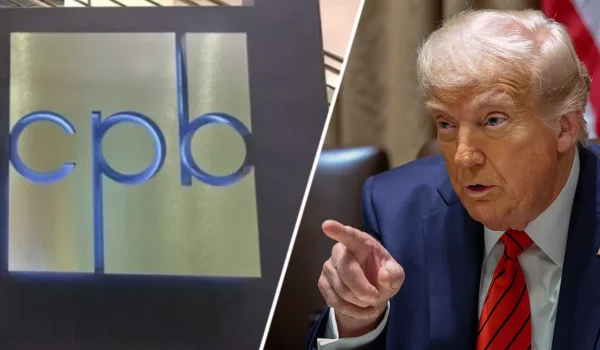
The Corporation for Public Broadcasting is a nonprofit corporation created by Congress in 1967 to support public broadcasting in the United States.
CPB has historically provided funding to public media organizations and local public television and radio stations, including organizations associated with PBS and NPR.
The dispute became especially important because Trump’s administration sought major changes to federal support for public broadcasting.
Why Did Trump Try to Remove CPB Board Members?
On April 28, 2025, the White House notified three CPB board members that their positions were terminated.
The three members were:
- Laura G. Ross
- Thomas E. Rothman
- Diane Kaplan
All three had been appointed during the Biden administration. The CPB board argued that the president did not have legal authority to remove them before their statutory terms ended.
The Trump administration took the opposite position, arguing that the president has constitutional authority to remove officials who exercise federal executive power.
Why Did the CPB Board Sue Trump?
CPB and the three affected board members filed a lawsuit in the U.S. District Court for the District of Columbia.
The case was filed on April 29, 2025, as Corporation for Public Broadcasting v. Trump, case number 1:25-cv-01305.
The plaintiffs argued that CPB was created by Congress as an independent corporation and that federal law specifically limited presidential control over it.
Their complaint asked the court to declare Trump’s attempted removals legally ineffective and prevent the administration from interfering with CPB’s governance.
What Was Trump’s Argument?
The Trump administration argued that the president had constitutional authority to remove the three board members.
The administration’s position was based largely on the president’s Article II authority over officials exercising federal executive power.
The White House argued that the president needs the ability to remove officials in order to effectively exercise executive authority.
Therefore, the core legal question was not simply whether Trump wanted new CPB board members. It was whether a president can remove members of an independent corporation created by Congress when the governing statute does not expressly give the president removal power.
What Did the Court Initially Do?
U.S. District Judge Randolph D. Moss considered CPB’s request for emergency relief.
The CPB wanted the court to prevent the administration from giving effect to Trump’s attempted removals while the larger lawsuit proceeded.
Judge Moss allowed the three board members to remain in their positions for the time being, although he did not grant every form of relief requested by CPB.
This meant the three directors continued to serve while the legal dispute developed.
Why Did Trump Sue the CPB Board Members?
The dispute escalated in July 2025.
After the three board members continued to act as CPB directors, the Trump administration’s Justice Department filed another lawsuit seeking to remove them.
The government argued that the three individuals were unlawfully continuing to exercise board authority after Trump had removed them.
The administration sought a court order declaring that they no longer lawfully held their positions.
So there were effectively two sides of the same legal fight:
| Case | Who filed it? | Main issue |
| CPB v. Trump | CPB and three board members | Whether Trump could remove the directors |
| DOJ action against board members | Trump administration | Whether the three directors could continue serving after their removals |
Did Trump Win the CPB Board Removal Lawsuit?
The answer is more complicated than simply saying yes or no.
The original CPB lawsuit was eventually dismissed because the circumstances that created the dispute changed.
CPB later announced that it would dissolve, and one of the individual board-member plaintiffs, Diane Kaplan, resigned.
The parties subsequently told the court that the case had become moot.
Judge Moss dismissed the case in January 2026.
Therefore, it would be misleading to say that Trump received a final judicial ruling definitively establishing that he had the authority to fire CPB board members.
Instead, the CPB lawsuit ended without a final merits ruling on that constitutional and statutory question.
Why Was the CPB Lawsuit Dismissed?
The lawsuit became moot because CPB’s circumstances changed dramatically.
CPB announced that it would end operations after Congress rescinded its federal funding.
The parties told the court that there was no longer a live controversy requiring a ruling on Trump’s attempted removals.
Judge Moss then dismissed the case in January 2026.
This distinction matters:
Dismissal does not mean the court ruled that Trump’s board removals were lawful.
The case ended because the underlying controversy was no longer live.
Did the Three Board Members Lose Their Positions?
The situation ultimately changed because CPB itself moved toward shutting down operations.
Diane Kaplan also resigned, according to the filing that led to dismissal of the CPB lawsuit.
As a result, the original dispute over whether Ross, Rothman and Kaplan could remain CPB directors became largely academic.
What Happened to CPB Funding?
The board-removal dispute occurred alongside the Trump administration’s broader effort to reduce or eliminate federal support for public broadcasting.
Trump had also directed CPB to stop directly and indirectly funding NPR and PBS, citing his administration’s view that those organizations were not sufficiently impartial.
Congress subsequently rescinded federal funding for CPB.
The loss of funding ultimately contributed to CPB’s decision to wind down operations.
Is the CPB Board Removal Case Still Active?
The original CPB lawsuit against Trump was dismissed in January 2026.
The case was closed after CPB and the other plaintiffs informed the court that the dispute had become moot.
That means you should be careful with articles that describe the original case as if it were still pending.
Was Trump Found Legally Allowed to Fire the CPB Board?
Not through a final merits ruling in this case.
This is one of the most important points when reporting on the lawsuit.
The CPB argued that Trump lacked removal authority. The Trump administration argued that he had that authority.
But the district court ultimately dismissed CPB’s lawsuit after the controversy became moot.
Therefore, the dismissal should not be described as a court ruling that definitively approved Trump’s removals.
Why Is the Case Important?
The lawsuit raised broader questions about the independence of federally created organizations.
The dispute involved several important constitutional and administrative-law issues:
- Presidential removal power
- Congressional control over independent entities
- Separation of powers
- Independence of public broadcasting
- Federal funding of NPR and PBS
- The legal status of CPB
- Presidential authority over federally created corporations
The case was therefore about more than three individual board members.
Is the CPB Lawsuit Related to the NPR and PBS Lawsuits?
Yes, but they are separate legal matters.
Trump’s administration pursued several actions involving public broadcasting.
The CPB board-removal dispute concerned who had authority to control the CPB board.
Separate lawsuits involved the administration’s attempts to restrict federal funding to NPR and PBS.
A federal judge later blocked Trump’s executive order targeting federal funding for NPR and PBS, finding that the order violated First Amendment protections.
That is a different case from the CPB board-removal lawsuit.
Trump CPB Board Removals Lawsuit Timeline
| Date | Event |
| April 28, 2025 | Trump attempted to remove three CPB board members |
| April 29, 2025 | CPB and the three directors sued Trump and administration officials |
| 2025 | Judge Randolph Moss allowed the directors to remain in place while the dispute continued |
| July 2025 | Trump administration sued the three directors over their continued service |
| August 2025 | CPB announced it would wind down operations |
| January 2026 | CPB’s lawsuit was dismissed as moot |
| 2026 | CPB proceeded toward dissolution |
The original lawsuit was filed as Corporation for Public Broadcasting v. Trump, 1:25-cv-01305.
Frequently Asked Questions
What was the Trump CPB board removal lawsuit?
It was a lawsuit challenging Trump’s April 2025 attempt to remove three Corporation for Public Broadcasting board members.
Who did Trump try to remove from the CPB board?
The three directors were Laura Ross, Thomas Rothman and Diane Kaplan.
Why did CPB sue Trump?
CPB argued that the president did not have authority to remove its board members because CPB was established as an independent corporation and its governing law did not give the president removal authority.
Did Trump win the CPB lawsuit?
There was no final merits ruling declaring that Trump’s removals were lawful. The CPB lawsuit was eventually dismissed because the dispute became moot after CPB moved toward dissolution.
When was the CPB lawsuit dismissed?
Judge Randolph Moss dismissed the case in January 2026.
Did the CPB board removal lawsuit involve NPR?
Not directly. The lawsuit concerned the CPB board. Separate litigation involved the Trump administration’s actions concerning NPR and PBS funding.
Does the CPB still operate?
CPB announced that it would wind down operations after Congress rescinded its federal funding.
Did the court rule that Trump could legally remove the CPB directors?
No final merits ruling in the CPB lawsuit established that. The case was dismissed as moot.
Bottom Line
The Trump CPB board removals lawsuit began after President Donald Trump attempted to remove three Corporation for Public Broadcasting directors—Laura Ross, Thomas Rothman and Diane Kaplan—in April 2025.
CPB and the directors sued, arguing that Trump did not have authority to remove them. The administration disagreed and later filed its own case seeking to remove the directors after they continued to serve.
The key point for readers is that Trump did not receive a final court ruling in the CPB lawsuit declaring that his removals were lawful. Instead, CPB later decided to dissolve after losing its federal funding, and the original lawsuit became moot. Judge Randolph Moss dismissed the case in January 2026.
Thus, the most accurate description is: the CPB board-removal lawsuit was dismissed after the underlying dispute became moot, rather than being resolved by a definitive ruling on the president’s removal power.