
The Judge Talwani Trump lawsuit has become an important federal election-law case ahead of the 2026 U.S. midterm elections. U.S. District Judge Indira Talwani blocked key parts of a Trump administration-backed U.S. Postal Service rule that would impose new requirements on mail-in ballots.
The dispute centers on a fundamental constitutional question: How much authority does the federal executive branch have to regulate the way states conduct elections?
President Donald Trump issued an executive order in March 2026 directing federal action concerning election integrity and mail-in voting. The U.S. Postal Service later adopted rules designed to implement parts of that order.
Several states and voting-rights organizations challenged the federal government’s actions in court. Judge Talwani concluded that the new USPS requirements were likely unlawful and could cause significant voter disenfranchisement if implemented immediately before the November 2026 election.
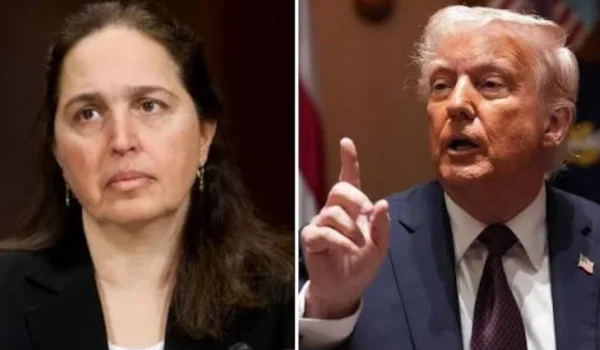
Who Is Judge Indira Talwani?
Indira Talwani is a federal judge serving on the U.S. District Court for the District of Massachusetts.
She was nominated to the federal bench by President Barack Obama and confirmed by the U.S. Senate.
Her name became nationally prominent in 2026 because of litigation challenging the Trump administration’s efforts to change federal election and mail-ballot procedures.
The case is particularly significant because federal courts are being asked to determine whether the President and USPS can impose requirements that potentially affect how states administer elections.
What Is the Trump Mail-In Voting Lawsuit About?
The litigation challenges provisions connected to Executive Order 14399, issued by President Trump on March 31, 2026.
The order directed the Postal Service to undertake rulemaking concerning federal-election ballot mail. The administration argued that the measures were intended to improve election integrity and prevent problems involving fraudulent or improperly handled ballots.
The plaintiffs—including voting-rights organizations and states—argued that the administration had exceeded its constitutional authority.
They also argued that implementing new requirements shortly before an election could create confusion and prevent otherwise eligible voters from successfully casting ballots.
Judge Talwani’s September ruling focused on the USPS’s final rule, “Ballot Mail for Federal Elections.”
What Did Judge Talwani Rule?
On September 4, 2026, Judge Talwani granted preliminary injunctions preventing USPS from implementing important mandatory portions of its final rule for the November 3, 2026 election.
The blocked provisions included requirements involving:
- Outbound ballot-envelope standards
- Return federal ballot-envelope standards
- USPS review of ballot envelopes
- Registration with a federal ballot-mail portal
- Voter enrollment in that portal
- Other mandatory procedures connected with the new system
The court specifically prevented USPS from implementing these requirements for the 2026 federal election.
This was a preliminary injunction, meaning the court was not issuing a final judgment resolving every issue in the case. Instead, the court determined that immediate enforcement should be stopped while the legal dispute continued.
Why Did Judge Talwani Block the Rules?
One of the central concerns was the potential impact on voters.
Judge Talwani concluded that the government had not demonstrated a strong likelihood of succeeding on the merits and that implementing the rule could cause serious harm to voters and other parties.
The court also considered the timing of the new requirements.
The November 2026 election was approaching, and states had already begun preparing or sending mail ballots. Implementing a new federal system at that stage could create logistical problems.
The court therefore determined that the balance of harms and public interest favored keeping the restrictions blocked while the litigation proceeded.
What Does the Constitution Say About Election Administration?
This is one of the most important legal questions in the case.
The U.S. Constitution gives states an important role in determining the Times, Places and Manner of holding elections, subject to Congress’s authority under the Elections Clause.
The Trump administration argued that its actions were within federal authority and primarily concerned the handling of election-related mail rather than taking control of state election administration.
The plaintiffs argued that the executive branch was effectively attempting to impose new election procedures that Congress had not authorized.
The dispute therefore involves questions of separation of powers, federalism and the Elections Clause.
What Was the Trump Administration’s Argument?
The administration defended the USPS rule as a reasonable measure designed to protect the integrity of federal elections.
Government lawyers argued that the rule did not take control of elections away from the states. Instead, they characterized it as a set of mail-related requirements designed to ensure that ballots were properly prepared and processed.
The administration also argued that allowing the injunction to remain in place could create confusion because states had already started mailing ballots.
The government subsequently asked the U.S. Supreme Court to intervene and allow the rules to take effect.
What Did the Plaintiffs Argue?
The plaintiffs took a very different position.
They argued that the federal government was attempting to impose requirements on state election systems without sufficient congressional authorization.
They also warned that the rules could result in otherwise valid ballots being rejected or not properly delivered.
The plaintiffs emphasized the timing of the implementation and argued that changing mail-ballot procedures shortly before an election could cause widespread confusion and potentially disenfranchise voters.
What Did the First Circuit Court of Appeals Decide?
The legal battle continued after Judge Talwani’s ruling.
On September 10, 2026, the U.S. Court of Appeals for the First Circuit declined to lift Talwani’s injunction.
The three-judge panel concluded that the administration had not made a strong showing that Talwani’s decision was legally wrong.
The appeals court also agreed that the plaintiffs had raised serious concerns about the federal government’s authority to impose the new requirements.
The decision represented another significant setback for the Trump administration’s effort to implement the mail-voting restrictions before the midterm elections.
Why Is the Supreme Court Involved?
The Trump administration has asked the U.S. Supreme Court to intervene.
The administration wants the Supreme Court to lift the injunction so that USPS can implement the new requirements before the November election.
The Supreme Court has already dealt with earlier stages of the dispute, including a previous injunction issued by Judge Talwani. However, the Court’s earlier procedural action did not constitute a final ruling on the ultimate constitutionality of the administration’s plan.
The Supreme Court’s eventual decision could therefore have major implications for federal election authority and mail voting.
Could the Rules Affect Millions of Voters?
Potentially, yes.
Mail voting is widely used throughout the United States. The concern raised by the plaintiffs is that strict new requirements could result in ballots being delayed, rejected or otherwise prevented from reaching voters if states or individual voters fail to comply with the new federal procedures.
Judge Talwani’s ruling specifically focused on the risk of voter disenfranchisement and the practical consequences of implementing the rule immediately before an election.
The administration, however, argues that the requirements are designed to improve election administration rather than restrict eligible voters.
What Is a Preliminary Injunction?
A preliminary injunction is a court order issued during ongoing litigation.
It generally seeks to preserve the status quo or prevent serious harm while the court considers the underlying legal issues.
It does not necessarily mean that the plaintiff has permanently won the lawsuit.
In Judge Talwani’s case, the preliminary injunction prevents USPS from enforcing specified portions of the rule for the November 2026 election while the broader legal dispute continues.
Does Judge Talwani’s Ruling Permanently End Trump’s Mail-Voting Plan?
No.
The ruling blocks specified provisions of the USPS rule for the relevant election period, but it does not by itself permanently resolve every constitutional and statutory question surrounding Trump’s executive order.
The federal government has appealed, and the Supreme Court is considering the administration’s request.
Therefore, the final legal status of the broader policy could still change depending on further appellate or Supreme Court action.
What Happens Next?
The biggest question is now the U.S. Supreme Court.
The administration has argued that immediate intervention is necessary because states are already preparing and distributing mail ballots.
The plaintiffs, meanwhile, want the injunction to remain in place so that states can continue using their existing election procedures without having to implement the disputed federal requirements shortly before Election Day.
With the 2026 midterm elections approaching, the Supreme Court’s decision could have immediate practical consequences for election officials and voters.
Why Is the Judge Talwani Trump Lawsuit Important?
This case goes beyond mail-in ballots.
It raises broader questions about the limits of presidential power.
If the administration ultimately succeeds, the case could strengthen the federal government’s ability to regulate aspects of election-related mail through executive action and USPS regulations.
If the plaintiffs prevail, the case could reinforce the principle that major changes to state election procedures require clear constitutional or congressional authority.
The dispute therefore involves several major areas of U.S. constitutional law:
- Presidential executive authority
- Federalism
- Separation of powers
- Elections Clause
- Administrative law
- Voting rights
- Postal Service authority
- Voter disenfranchisement
Latest Status of the Judge Talwani Trump Lawsuit
As of September 12, 2026, Judge Talwani’s injunction remains an important barrier to implementation of the Trump administration’s new mail-ballot requirements for the November 3, 2026 election.
The First Circuit upheld the block on September 10, while the Trump administration continues to seek relief from the U.S. Supreme Court.
The Supreme Court’s eventual ruling could determine whether the disputed USPS requirements can be implemented and could establish an important precedent concerning the federal government’s power over state election procedures.
FAQs
Who is Judge Talwani?
Judge Indira Talwani is a federal judge on the U.S. District Court for the District of Massachusetts. She was appointed by President Barack Obama.
What did Judge Talwani block?
She blocked USPS from implementing several mandatory portions of its new federal-election ballot-mail rule for the November 3, 2026 election.
Why did Judge Talwani block Trump’s mail-voting rules?
She found that the plaintiffs were likely to succeed on important legal issues and that implementing the rules could cause significant harm, including potential voter disenfranchisement.
Did the First Circuit support Judge Talwani?
Yes. On September 10, 2026, the First Circuit declined to lift her injunction.
Is the case going to the Supreme Court?
The Trump administration has asked the Supreme Court to lift the injunction. The Supreme Court’s consideration remains pending.
Does Judge Talwani’s ruling permanently stop Trump’s mail-voting rules?
No. The current order blocks specified provisions for the 2026 election while the broader litigation and appeals continue.
When is the 2026 U.S. midterm election?
The federal midterm election is scheduled for November 3, 2026.
Why is this case important?
The case could help define the limits of presidential and federal authority over election administration and determine how much power the executive branch has to impose election-related requirements on states.