
A federal judge has dismissed the U.S. Department of Justice lawsuit seeking Arizona’s detailed voter registration data, dealing a setback to the Trump administration’s nationwide effort to obtain voter information from states.
U.S. District Judge Susan M. Brnovich dismissed the case on April 28, 2026, after Arizona Secretary of State Adrian Fontes asked the court to throw out the lawsuit. The judge ruled that Arizona’s statewide voter registration list was not a document that the U.S. attorney general could demand under the federal law cited by the DOJ.
The case is United States v. Fontes, No. CV-26-00066-PHX-SMB, in the U.S. District Court for the District of Arizona.
What Was the Arizona Voter Data Lawsuit About?
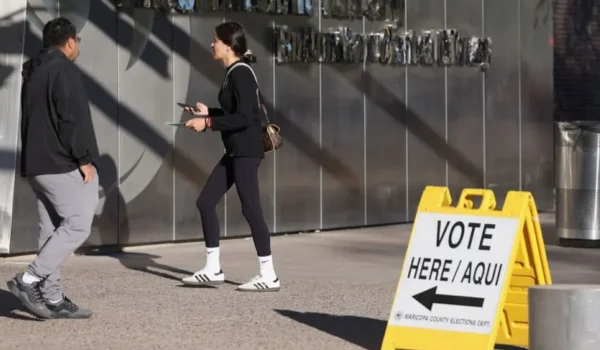
The dispute began after the Justice Department requested Arizona’s statewide voter registration list from Secretary of State Adrian Fontes.
The DOJ sought detailed information from Arizona’s voter rolls as part of its investigation into whether the state was complying with federal election laws.
According to the court’s order, the requested statewide voter registration list could include information such as:
- Voter’s full name
- Date of birth
- Residential address
- State driver’s license number
- Last four digits of a Social Security number
The DOJ relied on Title III of the Civil Rights Act of 1960, particularly 52 U.S.C. § 20701, in seeking the records.
Arizona refused to provide the requested information, citing state and federal privacy protections.
The DOJ then filed a federal lawsuit to force Arizona to turn over the records.
Why Did Arizona Refuse to Provide the Data?
Arizona Secretary of State Adrian Fontes argued that providing the requested information would conflict with privacy protections.
The voter list contained highly sensitive personal information, including dates of birth, addresses and partial identifying numbers.
Fontes maintained that Arizona was not legally required to hand over the detailed voter records requested by the federal government.
After the lawsuit was filed, Fontes asked the federal court to dismiss the case.
Why Did the Judge Dismiss the Arizona Voter Data Lawsuit?
The central question was whether the federal law cited by the DOJ actually gave the attorney general authority to demand Arizona’s statewide voter registration list.
Judge Brnovich concluded that it did not.
The court examined 52 U.S.C. § 20701, which governs the retention and preservation of election records.
The DOJ argued that the law gave the federal government authority to obtain Arizona’s voter registration records.
The judge rejected that interpretation.
The court concluded that Arizona’s statewide voter registration list was not a document subject to the attorney general’s request under that provision of federal law.
Because the court found that the legal basis for the DOJ’s request did not apply to the records, it dismissed the lawsuit.
Was the Arizona Voter Data Lawsuit Dismissed With Prejudice?
Yes.
This is an important part of the ruling.
Judge Brnovich dismissed the case with prejudice.
In simple terms, the DOJ cannot simply amend the same complaint and continue the case in the Arizona district court based on the same legal theory.
The judge specifically concluded that amendment would be legally futile.
The court also directed the clerk to enter final judgment and terminate the case.
Did the Judge Rule That the DOJ Can Never Request Voter Data?
Not exactly.
The ruling was focused on the specific legal authority and request involved in this case.
The court determined that the DOJ’s cited provision did not make Arizona’s statewide voter registration list a document that the attorney general could demand under that statute.
That is different from saying that the federal government can never obtain any voter information from Arizona under any circumstances.
What Did the DOJ Want the Voter Data For?
The Justice Department said its broader effort was intended to help determine whether states were complying with federal election laws and maintaining accurate voter registration lists.
The department has pursued similar lawsuits against numerous states that refused to provide detailed voter information.
The requested records can contain sensitive information such as:
- Names
- Dates of birth
- Addresses
- Driver’s license information
- Partial Social Security numbers
The DOJ’s stated purpose has included identifying potentially ineligible voters and examining compliance with federal election laws.
Critics have argued that demanding such detailed information raises serious privacy and federalism concerns.
What Did Adrian Fontes Say About the Decision?
Arizona Secretary of State Adrian Fontes welcomed the dismissal.
He described the decision as a victory for voter privacy and said Arizona would not comply with what he considered an unlawful request for sensitive voter information.
The ruling therefore represents an important legal victory for Arizona in the dispute over federal access to state voter records.
Is the Arizona Voter Data Lawsuit Related to Election Fraud?
The lawsuit itself was not a case determining whether Arizona’s elections were fraudulent.
It was primarily a dispute over:
- Federal authority
- Access to state voter registration records
- The interpretation of federal election-record laws
- Privacy protections
- The relationship between federal and state election administration
The court’s dismissal did not establish that Arizona’s voter rolls were accurate or inaccurate, nor did it make a finding about widespread voter fraud.
That distinction is important when reporting on this case.
Did the Court Find Voter Fraud in Arizona?
No.
The Arizona voter data lawsuit was about whether the federal government had legal authority to compel the state to provide its detailed voter registration records.
The judge did not rule that Arizona had widespread voter fraud.
Likewise, the dismissal did not determine that Arizona’s voter rolls were free from every possible error.
It was a legal ruling about the DOJ’s authority to obtain the records under the statute it relied upon.
Is This a Trump Administration Lawsuit?
Yes.
The Justice Department filed the lawsuit against Arizona during President Donald Trump’s second administration.
The DOJ’s nationwide effort has involved lawsuits against numerous states that declined to provide detailed voter registration data.
The Arizona case was one of several cases in which federal judges rejected the department’s efforts.
Interestingly, Judge Susan Brnovich was appointed by President Trump, making the ruling notable because it came from a judge appointed by the president whose administration brought the case.
How Many States Were Involved?
The DOJ’s effort expanded to more than 30 states and Washington, D.C.
By April 2026, federal judges had rejected similar efforts in several states, including Arizona, California, Michigan and Oregon.
Other states agreed to provide some or all of their requested voter data.
This created a patchwork of different outcomes across the country.
Did Arizona Give the DOJ Its Voter Data?
The federal court’s dismissal means the DOJ did not obtain the requested Arizona statewide voter registration list through this lawsuit.
Arizona had refused the request before the lawsuit was filed, citing privacy laws.
The April 28 ruling upheld Arizona’s position against the specific federal legal claim brought by the DOJ.
Was the Arizona Voter Data Lawsuit Appealed?
The case has continued beyond the district court ruling.
A federal litigation tracker reports that an appeal was filed in the Ninth Circuit on June 3, 2026.
Therefore, while the district court dismissed the lawsuit with prejudice, the broader legal dispute is not necessarily finished.
This is an important update for anyone searching for the “Arizona voter data lawsuit dismissal” because the district court’s dismissal and the status of any appeal are separate issues.
Arizona Voter Data Lawsuit: Key Timeline
| Date | Event |
| 2025 | DOJ requested Arizona’s detailed statewide voter registration data |
| January 2026 | DOJ sued Arizona Secretary of State Adrian Fontes |
| April 28, 2026 | Judge Susan Brnovich dismissed the lawsuit |
| April 28, 2026 | Court dismissed the case with prejudice |
| June 3, 2026 | Appeal to the Ninth Circuit was filed |
| August 2026 | District court dismissal remains an important ruling while the appeal proceeds |
The federal district court’s April 28 order confirms the dismissal, while the later litigation-tracking information records the June 3 appeal.
What Does “Dismissed With Prejudice” Mean?
Dismissed with prejudice means the particular case cannot simply be refiled in the same form after the court’s final dismissal.
In this case, Judge Brnovich went further and stated that changing the complaint would be legally futile because the voter registration list did not fall within the federal statutory provision relied upon by the DOJ.
However, because an appeal has been reported, the DOJ can ask the Ninth Circuit Court of Appeals to review the district court’s decision.
Does the Dismissal Mean Arizona Won?
At the district court level, yes.
Arizona Secretary of State Adrian Fontes successfully obtained dismissal of the DOJ lawsuit.
However, because an appeal was filed, it is more accurate to say:
Arizona won the district court ruling, but the broader dispute is subject to appellate review.
This is more precise than saying the entire legal dispute has permanently ended.
Could the DOJ Still Seek Arizona Voter Data?
Potentially, but the specific legal route used in this lawsuit was rejected by the district court.
The DOJ could potentially pursue other legal avenues depending on the applicable law, the nature of the information requested and the outcome of the appeal.
The April 28 decision specifically addressed the statutory authority invoked in United States v. Fontes.
Arizona Voter Data Lawsuit vs. Other Voter Lawsuits
The case should not be confused with lawsuits involving:
- Arizona election results
- 2020 election challenges
- Voter ID laws
- Noncitizen voting
- Mail-in voting
- Ballot-counting procedures
- Arizona voter-registration rules
The Arizona voter data lawsuit was specifically about the federal government’s attempt to obtain detailed voter registration records.
Frequently Asked Questions
Why was the Arizona voter data lawsuit dismissed?
The federal judge ruled that Arizona’s statewide voter registration list was not a document that the attorney general could demand under the federal law cited by the DOJ.
When was the Arizona voter data lawsuit dismissed?
Judge Susan Brnovich dismissed the case on April 28, 2026.
Was the Arizona voter data lawsuit dismissed with prejudice?
Yes. The judge dismissed it with prejudice and stated that amending the complaint would be legally futile.
Who did the DOJ sue?
The DOJ sued Arizona Secretary of State Adrian Fontes.
What voter data did the DOJ request?
The requested statewide voter registration information could include names, dates of birth, residential addresses, driver’s license numbers and partial Social Security numbers.
Did Arizona have to give the DOJ the voter data?
The district court rejected the DOJ’s attempt to compel Arizona to provide the requested statewide voter registration list under the statute cited in the lawsuit.
Has the DOJ appealed?
Yes. A federal litigation tracker reports that an appeal was filed in the Ninth Circuit on June 3, 2026.
Did the judge rule that there was no voter fraud in Arizona?
No. The case was about access to voter registration records and federal statutory authority, not a determination of whether voter fraud occurred.
Bottom Line
The Arizona voter data lawsuit dismissal was a significant legal setback for the Justice Department’s effort to obtain detailed voter registration records from Arizona.
On April 28, 2026, U.S. District Judge Susan Brnovich ruled that Arizona’s statewide voter registration list was not subject to the attorney general’s request under the federal statute relied upon by the DOJ. She dismissed the lawsuit with prejudice, finding that amendment would be legally futile.
The case involved sensitive voter information, including names, dates of birth, addresses, driver’s license numbers and partial Social Security numbers.
However, the legal dispute did not necessarily end with the district court ruling. A federal litigation tracker reports that the DOJ filed an appeal in the Ninth Circuit on June 3, 2026.
So, as of August 2026, the most accurate description is: Arizona won the district court dismissal, but the DOJ’s appeal means the broader voter-data dispute remains active.