
Police officers and dispatchers often communicate through short radio codes instead of using long sentences. These police department codes, commonly known as 10-codes, were developed to make radio communication faster and more efficient.
Codes such as 10-4, 10-7, 10-8, and 10-20 are frequently heard in police radio communication, movies, television shows, and scanner broadcasts. However, one important fact is often overlooked: police codes are not universal. The meaning of a particular code can vary from one police department or jurisdiction to another.
The use of 10-codes dates back to early public-safety radio communication. APCO International notes that its early projects helped establish the familiar 10-code system, with standardized signal sets developed and revised during the 20th century.
What Are Police Department Codes?
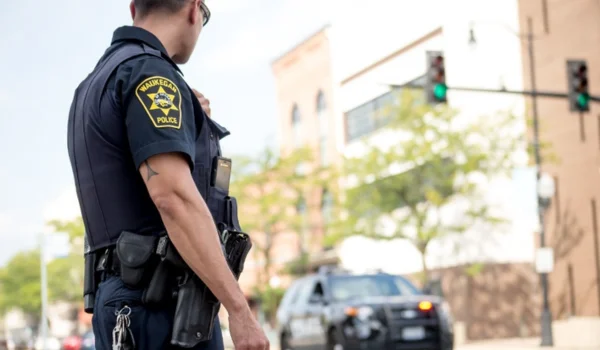
Police department codes are abbreviated communication signals used by law enforcement officers, dispatchers, and other public-safety personnel.
Instead of communicating a complete sentence over the radio, an officer may use a short code to convey information quickly.
For example:
- 10-4 commonly means message received or acknowledged.
- 10-7 commonly means out of service.
- 10-8 commonly means in service or available.
- 10-20 commonly refers to an officer’s location.
These meanings are common examples, but they should not automatically be assumed to apply to every police department.
Why Do Police Use 10-Codes?
Police radio communication needs to be brief, clear, and efficient. Officers may be driving, responding to calls, managing an emergency, or communicating with dispatch while performing other duties.
10-codes were developed to help:
- Reduce the length of radio transmissions
- Communicate routine information quickly
- Improve radio efficiency
- Provide standardized shorthand within an agency
- Make frequent messages easier to transmit
APCO’s historical work on 10-codes specifically focused on improving public-safety radio communication and creating standardized signals.
Common Police 10-Codes and Their Meanings
The following table lists commonly used meanings associated with police 10-codes. Because departments can modify their radio codes, these should be treated as general references rather than an official codebook for every agency.
| Police Code | Common Meaning |
| 10-1 | Unable to copy / signal weak |
| 10-2 | Signal good |
| 10-3 | Stop transmitting |
| 10-4 | Message received / acknowledged |
| 10-5 | Relay message |
| 10-6 | Busy / stand by |
| 10-7 | Out of service |
| 10-8 | In service / available |
| 10-9 | Repeat last transmission |
| 10-10 | Negative / unable to comply in some agencies |
| 10-20 | Location |
| 10-21 | Call by telephone |
| 10-22 | Disregard previous message |
| 10-23 | Stand by |
| 10-24 | Assignment completed |
| 10-27 | Driver’s license information/check |
| 10-28 | Vehicle registration information/check |
| 10-29 | Check for wanted person or warrant |
| 10-33 | Emergency traffic |
| 10-97 | Arrived at scene |
| 10-98 | Assignment completed |
Note: The exact meaning of these codes can differ by agency. A code listed above as a common meaning may have a different meaning—or no operational use at all—in a particular department.
What Does 10-4 Mean?
10-4 is one of the best-known police radio codes.
It commonly means:
Message received or acknowledged.
For example, a dispatcher may provide an officer with information and the officer may respond with “10-4” to indicate that the transmission was understood.
The expression became widely recognized outside law enforcement through radio culture, television, movies, trucking communications, and popular culture.
What Does 10-7 Mean?
10-7 commonly means that an officer is out of service.
Depending on the agency’s procedures, this can indicate that the officer is temporarily unavailable for calls.
The exact circumstances associated with the code can vary between agencies.
What Does 10-8 Mean?
10-8 commonly means in service or available for calls.
For example, an officer returning to normal patrol availability may notify dispatch that they are 10-8.
Again, local communications policies determine how the code is actually used.
What Does 10-20 Mean?
10-20 is commonly associated with an officer’s location.
The phrase “What’s your 10-20?” is therefore commonly understood as asking:
“What is your location?”
This is one reason the expression became popular outside police communications as well.
Are Police Codes the Same Everywhere?
No.
This is one of the most important things to understand about police department codes.
A 10-code used by one department may have a different meaning in another jurisdiction. Some agencies may also use additional codes that are not part of commonly published lists.
FEMA specifically warns that 10-codes and other acronyms can differ between agencies and says that ambiguous codes can create communication problems during incidents involving multiple organizations. Under NIMS/ICS, responders are generally expected to use plain language or clear text during incidents so that different agencies can understand one another.
Police 10-Codes vs Plain Language
Modern emergency management places considerable importance on clear communication.
Imagine a major incident involving:
- City police
- County law enforcement
- Fire departments
- EMS
- State agencies
- Federal agencies
If each organization uses different meanings for the same numerical code, confusion can occur.
For this reason, FEMA’s NIMS guidance emphasizes plain English/clear text rather than agency-specific codes during multi-agency incidents.
This does not mean that every police department has completely eliminated 10-codes from routine radio operations. Rather, the use of codes depends on the agency, communication system, and operational circumstances.
Police Codes vs Penal Codes
It is also important not to confuse police radio codes with criminal or penal codes.
Police Radio Codes
These are communication shortcuts used by officers and dispatchers.
Examples include:
- 10-4
- 10-7
- 10-8
- 10-20
Penal or Criminal Codes
These refer to laws defining offenses and legal violations.
For example, a state’s criminal code may contain statutory sections dealing with theft, assault, burglary, or other offenses.
Therefore, a 10-code is generally a communication signal, not a criminal charge or statute.
Do All Police Departments Publish Their Codes?
No.
Some departments publish information about communications, policies, or radio systems, while others may not publicly provide a complete list of operational codes.
There can also be a difference between:
- Publicly available communication terminology
- Internal dispatch procedures
- Department-specific radio codes
- Emergency response terminology
- State or federal communication standards
Therefore, an online list should not automatically be considered the official code list for a particular police department.
How to Find the Correct Codes for a Police Department
If you need codes for a specific police department, the safest approach is to check information published by that agency or its governing city/county.
You can look for:
- The department’s official website
- Public safety communications information
- Police policy manuals
- Public records or transparency portals
- Official dispatch documentation
- Local government publications
If the department does not publish its codes, it is better not to assume that a general internet list represents that agency’s actual terminology.
Are Police 10-Codes Still Used?
Yes, but their use varies.
Some agencies continue using 10-codes for routine communications, while others have moved toward plain-language communication, particularly when interoperability between multiple agencies is important.
The development of modern incident-management systems has increased the emphasis on common terminology. FEMA’s NIMS framework is designed to help organizations from different jurisdictions communicate using consistent terminology during major incidents.
Frequently Asked Questions
What is the most common police code?
10-4 is one of the most widely recognized police and radio codes and commonly means “message received” or “acknowledged.”
What does 10-20 mean in police language?
10-20 commonly refers to an officer’s location. However, the exact meaning should always be confirmed for the particular department.
What does 10-7 mean?
10-7 commonly means out of service.
What does 10-8 mean?
10-8 commonly means in service or available.
Are police 10-codes universal?
No. Police departments can use different meanings for the same code. This is why official agency information should be consulted when an exact local meaning is required.
Why do some agencies use plain language instead of 10-codes?
Plain language makes communication easier when multiple agencies work together. FEMA’s NIMS guidance emphasizes clear text because different agencies may otherwise interpret the same codes differently.
Conclusion
Police department codes, especially 10-codes, have played an important role in law-enforcement radio communication for decades. They provide short ways to communicate routine information such as status, location, or acknowledgment.
However, there is no single universal list that applies to every police department. Local agencies may modify, replace, or completely avoid particular codes. For major multi-agency incidents, modern emergency-management guidance emphasizes plain language to reduce confusion.
Therefore, if you are looking for the meaning of a particular police code, always consider which department, state, or jurisdiction uses it before relying on the definition.
Disclaimer
This article is provided for general informational and educational purposes only. The police codes and meanings listed here are common/general references and should not be treated as an official codebook for any specific police department, law-enforcement agency, or jurisdiction.
Police communication codes and procedures may change and may differ between departments. This article is not affiliated with, endorsed by, or published by any police department, government agency, or law-enforcement organization. For official or operational information, readers should consult the relevant agency or its official publications.
In an emergency or situation requiring immediate police assistance, contact the appropriate emergency service rather than relying on information from this article.