
The Credit One Bank lawsuit settlement can refer to several different legal disputes, so it is important not to combine them into one case.
The most significant recent settlement involving Credit One Bank is a $10.2 million settlement with four California district attorneys over allegations that Credit One and its vendors made repeated and intrusive debt-collection calls. Credit One did not admit wrongdoing. The judgment was entered on February 19, 2026.
There are also separate proposed class actions involving Credit One. Some websites have claimed that Credit One agreed to a large consumer class-action settlement, including claims of $500 or $1,000 payments. Those claims should be treated carefully because there is no reliable evidence of a court-approved nationwide settlement matching those claims.
Credit One Bank $10.2 Million Settlement
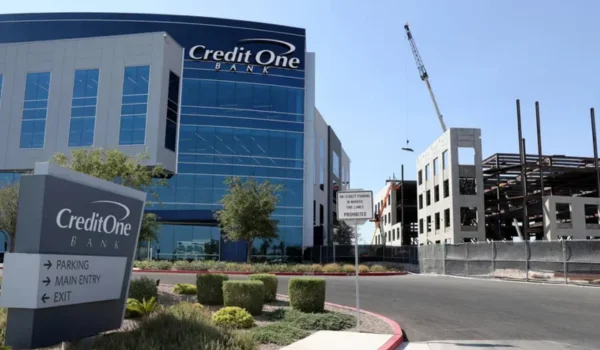
The $10.2 million case was brought by the district attorneys of:
- Los Angeles County
- Riverside County
- San Diego County
- Santa Clara County
The prosecutors alleged that Credit One or companies working on its behalf made repeated debt-collection calls that violated California consumer-protection laws and privacy protections.
The case was resolved through a judgment entered in Riverside County Superior Court on February 19, 2026.
How Is the $10.2 Million Divided?
The settlement consists of:
| Payment | Amount |
| Civil penalties | $9 million |
| Investigative costs | $1.2 million |
| Total | $10.2 million |
Credit One did not admit wrongdoing as part of the resolution.
Does Every Credit One Customer Get Money?
No.
This is an important point.
The $10.2 million payment is a government enforcement settlement. It is not a $10.2 million consumer class-action fund that is automatically divided among Credit One cardholders.
Therefore, if you see a headline saying that every Credit One customer can claim part of a $10.2 million settlement, that would be misleading.
What Were the Allegations Against Credit One?
California prosecutors alleged that Credit One and its vendors used repeated telephone calls to collect debts.
The allegations included claims that consumers received excessive or harassing calls.
The California prosecutors said the conduct violated state consumer-protection laws and the state’s constitutional privacy protections.
The judgment also requires Credit One to comply with applicable state and federal laws governing debt collection.
Credit One has disputed the allegations and said it has complied with California law regarding collection practices.
Is This the Credit One Class Action Lawsuit?
Not necessarily.
There are separate Credit One lawsuits and proposed class actions.
For example, Whitehead v. Credit One Bank, N.A., Case No. 2:25-cv-01008, is a separate federal case in the District of Nevada. Public reporting indicates that the case does not have a court-approved class settlement at this time.
This distinction is important because online articles and social-media posts sometimes combine different Credit One cases and describe them as one settlement.
What About the Alleged $14 Million Credit One Settlement?
You may also see websites or videos claiming that Credit One agreed to a $14 million class-action settlement.
That claim should be approached cautiously.
A search result for a video makes that assertion, but it does not establish that a court approved such a settlement.
Similarly, another website specifically reports that the supposed nationwide class-action settlement has not received court approval and that there was no official claims website for that case at the time of its report.
Therefore, it would be unsafe to tell readers that they are entitled to a $500, $1,000 or other payment simply because they have or previously had a Credit One card.
Is There a Credit One $1,000 Settlement?
There have been online claims that eligible Credit One customers could receive up to $1,000.
However, these claims should not be confused with the confirmed $10.2 million California enforcement settlement.
There is currently no basis to state that every Credit One customer can submit a claim for $1,000 under that settlement.
The amount a consumer could potentially receive in any separate class action would depend on the specific lawsuit, class definition, settlement terms and court approval.
What Should Credit One Customers Do?
If you believe Credit One improperly contacted you about a debt, keep records such as:
- Call logs
- Voicemails
- Text messages
- Letters
- Account statements
- Payment records
- Copies of complaints
- Communications with Credit One
These records can be useful if you have an individual legal dispute.
You should also be careful about entering your Social Security number, bank information or other sensitive information into an unofficial “Credit One settlement” website.
Is There a Current Credit One Settlement Claim Form?
For the confirmed $10.2 million California settlement, there is not a general consumer claim process comparable to a typical class-action settlement where every qualifying cardholder submits a claim form.
The money is being paid as part of the government enforcement action.
Credit One’s own website provides information for customers who need to dispute transactions or charges, but that is separate from the California settlement.
Credit One Bank Lawsuit Settlement Timeline
| Date | Event |
| 2021 | California debt-collection case was filed |
| 2025 | Separate Credit One class-action litigation continued |
| Feb. 19, 2026 | $10.2 million California judgment entered |
| Feb. 20, 2026 | Credit One announced resolution of the investigation |
| 2026 | Separate Credit One lawsuits remain subject to their own proceedings |
Credit One said it entered the California settlement to avoid the cost and inconvenience of further litigation and expressly denied wrongdoing.
Frequently Asked Questions
Did Credit One Bank settle a lawsuit?
Yes. Credit One agreed to a $10.2 million resolution with California prosecutors over alleged unlawful debt-collection calls. The bank did not admit wrongdoing.
How much is the Credit One settlement?
The confirmed California settlement is $10.2 million, consisting of $9 million in civil penalties and $1.2 million in investigative costs.
Will Credit One customers receive the $10.2 million?
No. This is a government enforcement settlement, not a general consumer payout fund.
Is there a $1,000 Credit One settlement?
Online sources have made claims about payments of up to $1,000, but you should not treat those claims as a confirmed nationwide settlement without a court-approved settlement notice.
Is the Credit One $14 million settlement real?
There are online claims about a $14 million class-action settlement, but available evidence does not establish a court-approved $14 million nationwide settlement.
Can I file a Credit One settlement claim?
There is no general claim form for the confirmed $10.2 million California enforcement settlement. Separate class actions may have different procedures if a court eventually approves a settlement.
What was Credit One accused of doing?
California prosecutors alleged that Credit One or its vendors made repeated, intrusive and harassing debt-collection calls in violation of California law.
Did Credit One admit wrongdoing?
No. Credit One expressly denied wrongdoing and said it settled the California matter to avoid further litigation costs and inconvenience.
Bottom Line
The confirmed Credit One Bank settlement in 2026 is $10.2 million, involving a California government enforcement case over alleged debt-collection calls. It is not a $10.2 million consumer class-action payout. Claims online about automatic $500 or $1,000 payments should be verified against an official court-approved settlement before providing personal information.